What Is Fiberglass Insulation Made Of?

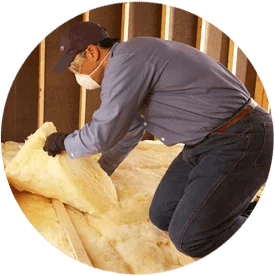
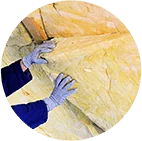
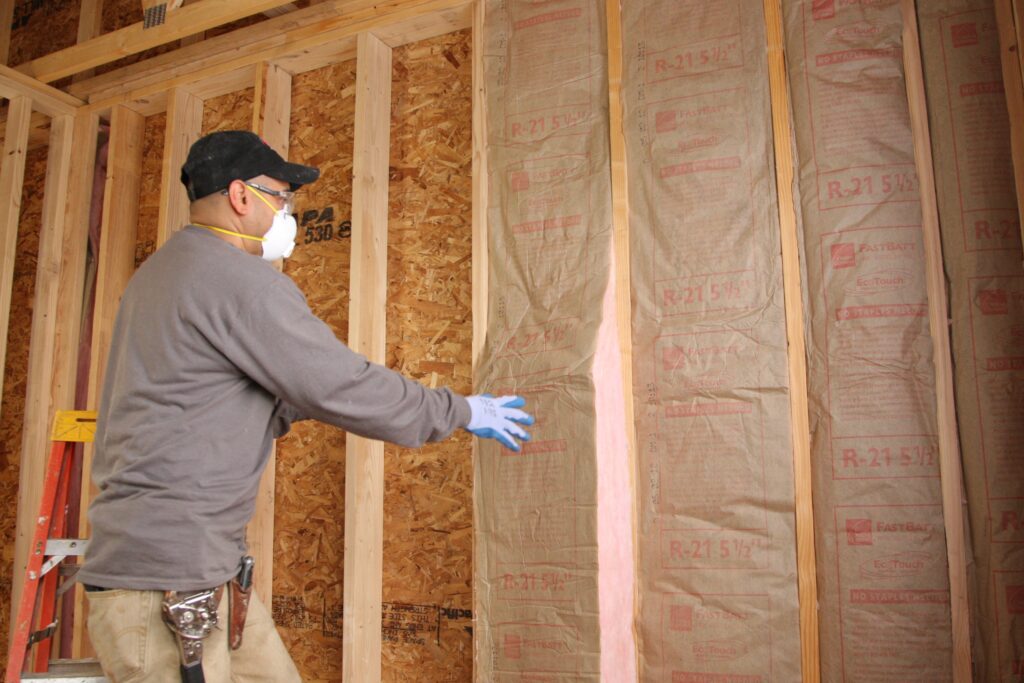
Insulation contractor installing fiberglass batt insulation in an unfinished wall.

If you want to make your home or business more energy-efficient, you’re wise to consider insulating, but which type should you choose? Fiberglass is one of the most popular insulation materials used today for everything from attic insulation to wall insulation and more.

Still, you might be wondering what fiberglass insulation is made of and how it works. Keep reading to find out.

What Fiberglass Insulation Is Made Of

As the name suggests, fiberglass is made of glass fibers. This includes several basic raw materials, the primary of which are silica sand, limestone and soda ash. Other ingredients used in fiberglass insulation production include borax, calcinated alumina, feldspar, kaolin clay, magnesite and nepheline syenite.

Discontinuous glass fibers are used to create batts, blankets or blown-in insulation to resist heat flow and absorb sound. Fiberglass is also available in long, continuous fibers used to make everything from drapes and shower curtains to window frames and roof shingles.

How Is Fiberglass Insulation Made?

The mixture is prepared with the proper amount of raw ingredients and melted at a temperature of 2,500 degrees Fahrenheit. This process gives fiberglass insulation the ability to resist heat flow. The molten glass flows from the furnace into a cylindrical container with small holes.

As the container spins, glass flows out of the holes. A blast of air separates the filaments into short strands, which fall onto a conveyor belt and interlace into a fleecy batt of fiberglass insulation.

How Fiberglass Insulation Works

Fiberglass insulation works because the fibers trap pockets of air, slowing the movement of heat through them. When installed in a building, fiberglass helps keep conditioned air inside and can decrease heating and cooling costs as a result.

Is Fiberglass Insulation Safe for Homes?

Fiberglass insulation is an excellent choice from a fire safety perspective because fiberglass is fire-resistant without any additives.

However, it’s important not to handle fiberglass with your bare hands because the tiny glass particles can irritate your skin and sometimes cause a rash. Inhalation can also result in coughing and other respiratory ailments.

It’s important to leave fiberglass insulation installation to an experienced professional. Once in place, fiberglass poses no health risks or safety hazards.

Schedule Fiberglass Insulation for Your Idaho Home or New Construction Building

At Big City Insulation of Idaho, we install residential and commercial insulation in new construction and retrofit projects.

Schedule residential insulation services with Big City Insulation of Idaho today.
Can You Paint Over Spray Foam Insulation?

Yes, people paint over spray foam for several reasons, including aesthetics, UV protection, fire resistance and sealing. Many prefer the look of a painted surface over spray foam’s raw appearance.

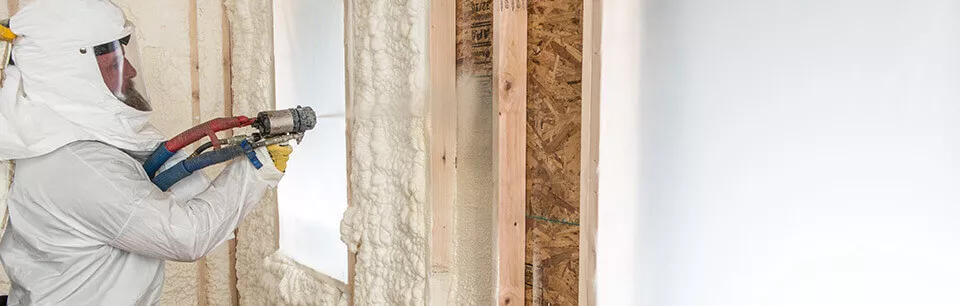
A technician applying spray foam insulation to a wall

While spray foam insulation is most often hidden within attics, walls and crawl spaces, there are times when it’s exposed, and homeowners might want to paint it:

  • Exterior walls: Spray foam is sometimes applied to exterior walls for insulation. Painting protects it from the elements and improves its appearance.
  • Attic access panels: If visible from other living spaces, the exposed spray foam can appear unsightly.
  • Garage doors: Spray foam is frequently used to insulate garage doors. Painting it ensures the door matches or complements the rest of the house.

Painting spray foam requires careful preparation and the correct paints. Consulting with a specialist is a good idea, even if you intend to do the job yourself.

What Is the Best Paint to Use Over Spray Foam Insulation?

Water-based latex or acrylic paints work best on spray foam. They adhere well to the foam’s surface, and their flexibility reduces the risk of cracks as the foam expands and contracts. When selecting a paint, look for one with low VOCs, which ensures a safer indoor environment.

While it’s possible to paint spray foam yourself, hiring a professional might ensure better results. They tend to have the proper equipment to ensure overall better results, especially in hard-to-reach areas.

Tips For Painting Over Spray Foam Insulation

If you’re considering tackling the project on your own, these five tips can ensure a smooth and successful finish.

  1. Clean the surface: While it can feel dry to the touch after one or two hours, spray foam generally takes about 24 hours to fully cure. Once it’s completely dry and set, remove any dust, debris or grease so the paint adheres properly.
  2. Use soft-bristle brushes or rollers: These tools ensure gentle application without damaging the foam.
  3. Use a primer: Apply a high-quality primer designed for foam to seal the surface and create a smooth base for painting.
  4. Apply thin coats: Multiple thin coats provide better coverage and reduce the chance of dripping or an uneven texture.
  5. Allow ample drying time: Let each coat fully dry before applying the next one. This helps prevent streaks and clumping.

Considerations for Painting Over Open-Cell vs. Closed-Cell Spray Foam

When painting open-cell or closed-cell spray foam insulation, keep these considerations in mind:

  • Closed-cell spray foam is more dense and rigid, which provides a sturdier base. However, its smoother texture can make getting the paint to stick a bit tricky. For even coverage, apply multiple thin coats of paint so they bond properly without streaking.
  • Open-cell spray foam is softer and more pliable, which comes with its own set of challenges. The foam’s flexibility means it can easily dent or compress if too much pressure is applied, especially when using a roller or brush. A paint sprayer is a better choice, as it delivers a gentle, even application without foam damage.

If you’re not sure you have sufficient painting skills — or need to buy a lot of equipment — consider hiring an experienced painter. The pros know how to achieve smooth, consistent results while avoiding common pitfalls, and they tend to have the most advanced tools. However, if you want to do the job yourself, make sure to use a quality sprayer and take extra care to avoid damaging the foam.

Temperature and humidity are additional factors to consider. Boise is lucky not to have particularly high humidity, but summers can be hot. Be sure conditions are optimal for painting. For instance, extreme heat can blister and peel paint. It can also cause it to cure at uneven rates, resulting in inconsistent color or a patchy appearance.

Trust Big City Insulation of Idaho for All Your Insulation Needs

Big City Insulation of Idaho offers expert insulation services with free estimates, a wide range of materials like fiberglass and rockwool and unmatched expertise as part of the leading IBP Family of Companies.

To learn more about all our products and services, contact us online today.

Soundproofing Your Home With High Quality Insulation

Blown-in insulation being installed in crawl space

When it comes to insulation, one aspect that often goes overlooked is the ability to soundproof.

Insulating your home or apartment building for soundproofing is a great way to reduce exterior noise from outside and help minimize noise transfer between rooms and floors of the building by ensuring walls and ceilings are well-insulated.

In this blog post, the insulation experts at Big City Insulation of Idaho offer tips for soundproofing your home so you can enjoy a more peaceful, relaxing indoor environment.

Best Insulation To Soundproof Your Home

One of the most important aspects of soundproofing your home is selecting the right insulation material. There are several insulation options that are great for reducing noise between rooms, floors and the outdoors, including:

  • Blown-in cellulose insulation: Comprised of recycled materials and capable of withstanding fires and pests, blown-in cellulose insulation is another great option for soundproofing areas in your home or apartment building.
  • Blown-in fiberglass insulation: A great option for finished walls, blown-in fiberglass can easily fill cavities to create a thick layer of protection against unwanted heat and noise transfer.
  • Fiberglass batt insulation: Fiberglass batts are designed to form a perfect fit between wall studs and framing, providing ample thermal protection and powerful sound-dampening capabilities.
  • Rockwool insulation: Created from spun rock fibers and metal slag, rockwool insulation is denser than fiberglass batts, providing slightly better soundproofing capabilities.

How to Soundproof Your Home With Re-Insulation

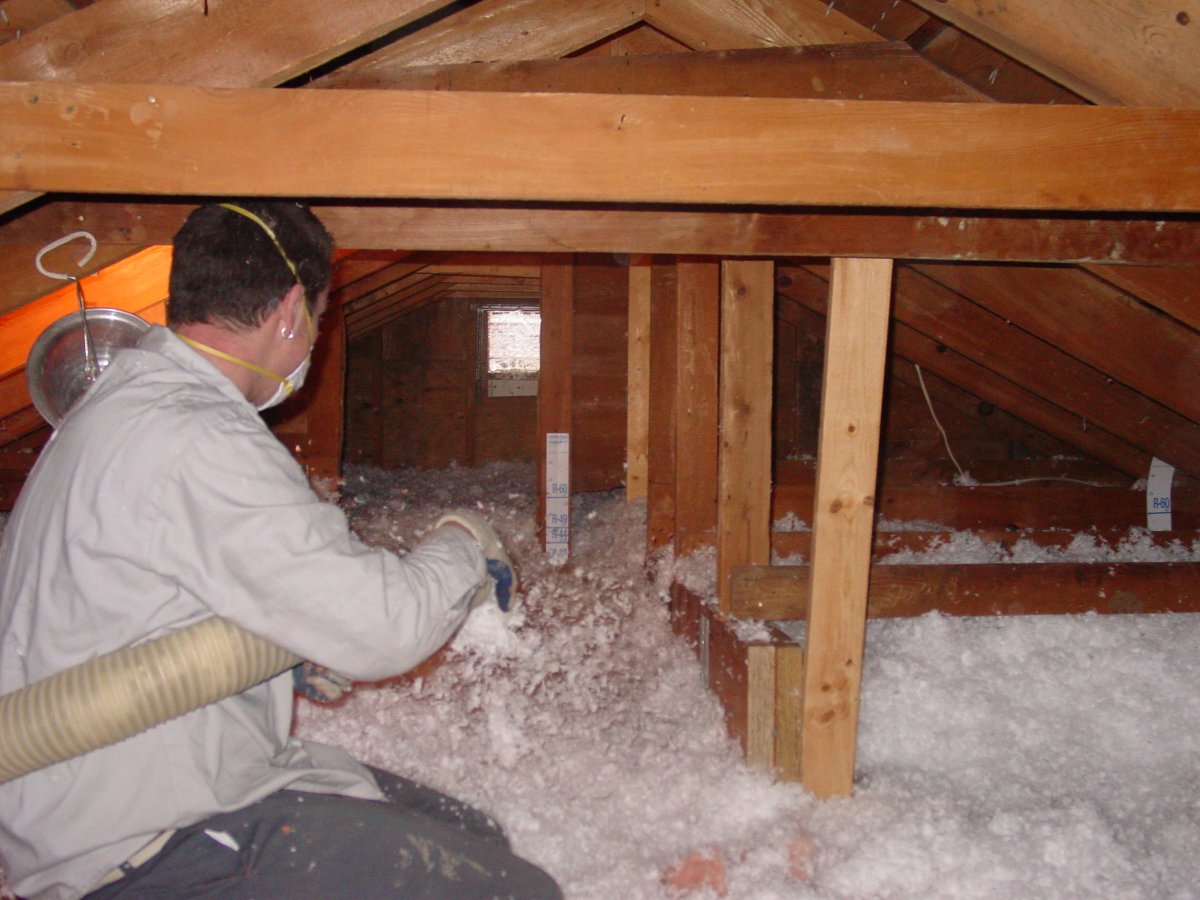
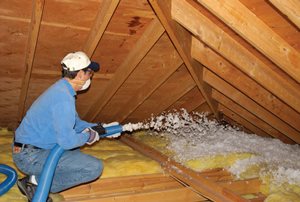
Technician blowing in loose-fill insulation in an attic.

If you have an existing structure and are concerned about the insulation quality, re-insulation services can provide the solution. Retrofit insulation involves replacing or enhancing your existing insulation materials to improve energy efficiency and soundproofing throughout the property.

During this process, your insulation professionals will remove old, ineffective insulation and install new materials, such as fiberglass, rockwool or cellulose.

Upgrading your insulation can help address gaps and air leaks, ensuring they’re adequately sealed to provide optimal thermal protection while minimizing noise transfer between rooms and from outside.

This can significantly reduce noise pollution in a home or apartment building, creating a quieter, more comfortable living environment.

Get a Quote on Insulation Installation in Idaho

Interested in enhancing your home or apartment building’s soundproofing through re-insulation? Big City Insulation of Idaho offers the retrofit insulation solutions you need to strengthen sound protection in your property.

We also have a wide selection of top-quality insulation products, so our team can introduce you to a range of powerful soundproofing capabilities for your home or business.

At Big City Insulation of Idaho, we’re committed to providing energy-efficient insulation solutions for new and existing single-family and multifamily residential and commercial properties.

We achieve this by prioritizing safety, integrity, dependability, commitment, collaboration and excellence every step of the way. With free service estimates and a team of friendly, experienced professionals, we’ll help minimize noise pollution in your property in no time.

Request a free quote for insulation installation in Idaho today!

How Does Insulation Work?

Insulation is a basic component of nearly every home and most commercial buildings in the Boise area. It is typically installed during the construction process and is ultimately covered by drywall and subflooring, followed by finished walls, ceilings and floors. It plays an important role in our comfort and energy costs, but it remains hidden away and is easily overlooked.

What Is Insulation?

Insulation is used to fill the gaps and voids in walls, ceilings, floors and other structure locations before the finished surfaces are installed. Its primary purpose is to slow the movement of heat from warmer areas to cooler areas.

Call us today at 208-322-3522 or contact us online to request a quote for insulation services anywhere in Boise, Twin Falls, or the surrounding areas of Idaho.

How Does Insulation Work?

Insulation acts as a barrier between two areas with different temperatures. Most insulating materials like fiberglass and mineral wool are poor conductors of heat. As the heat in one area naturally tries to move towards cooler areas to reach equilibrium, or a stable state, the insulation slows the process. In the winter, insulation helps keep the heat indoors longer, reducing the need for the heating system to cycle back on. In the summer, insulation helps keep the heat out, which warms the indoor air and counteracts the air conditioning system.

An insulation’s R-value represents its resistance to heat flow, with higher R-values indicating greater resistance and better insulating properties. In the Boise area, the U.S. Department of Energy recommends insulation levels between R-38 and R-60 in the attic, R-13 to R-21 in exterior walls and R-25 to R-30 in floors and crawl spaces.

The Most Common Types of Insulation

Insulation comes in a wide variety of types and materials, but here are the most common that will be encountered in modern buildings:

  • Fiberglass insulation Available in batts, rolls and blown-in varieties, fiberglass is made from thin glass fibers arranged into layered mats, providing excellent thermal insulation.
  • Cellulose insulation Made primarily from recycled newspaper treated to resist fire and pests, cellulose offers good air sealing, insulation and soundproofing abilities.
  • Spray foam insulation Applied as a liquid, spray foam expands to fill voids in the wall cavity and adheres to surrounding surfaces, providing superior insulation and air sealing in one product.
  • Radiant barrier insulation – Made from reflective insulation panels, radiant barriers reflect much of the sun’s heat, making them ideal for hot climates and reducing attic temperatures.
  • Rigid foam insulation Rigid foam is extruded or expanded foam that is formed into panels for easy installation on a variety of surfaces, such as under siding or roofing materials, to add extra insulation without tearing into interior walls.
  • Mineral wool insulation Made from spun rock fibers, mineral wool offers excellent insulation and soundproofing abilities along with natural resistance to pests.

Spray foam and rigid foam insulation offer the highest R-values per inch at about R-6.5, followed by cellulose, fiberglass and mineral wool, ranging from about R-2.9 to R-4.6 depending on the brand and product.

Where To Insulate in a Home

The most important types of insulation for a comfortable home year-round include:

  • Attic insulation Installed in the attic floor, insulation keeps heat from rising into the attic during the winter. In the summer, attic insulation stops attic heat from tempering the cooler air below.
  • Wall insulationWall insulation contains heated air in the winter, and keeps out hot air in the summer.
  • Basement insulation Done properly, basement insulation prevents cold floors and heat loss into the basement during the winter. It also prevents tempering the conditioned air during the summer.
  • Crawl space insulation – Crawl space insulation prevents heat loss to the crawl space in the winter or heat gain in the summer.

Insulation Contractors in Boise, Idaho

When you need quality insulation in the Boise area, along with professional installation services, turn to our team at Big City Insulation of Idaho. We feature fiberglass, cellulose, rigid foam and mineral wool insulation for both residential and commercial projects. Our company features friendly, experienced personnel and free estimates. We’re also part of the Installed Building Products Family of Companies, the nation’s second-largest insulation installer.

Insulating Your Attic in the Winter

If you want to improve the energy efficiency of your home and lower your monthly bills, adding attic insulation in winter is a great way to help with this. It offers many other benefits as well.

Benefits of Adding Attic Insulation in Winter

The advantages of insulating your attic include:

  • Improving heating efficiency: Insulation acts as a thick blanket on top of your home to keep heated air inside, resulting in energy savings. Insulation also helps keep your home cooler in the summer.
  • Boosting home comfort: Insulating your attic helps eliminate hot and cold spots. You can expect a more comfortable, consistent temperature when you aren’t losing heating through the ceiling in the winter.
  • Reducing your carbon footprint: Any time you cut back on energy consumption, you reduce the amount of emissions your home adds to the atmosphere. In this way, adding attic insulation in winter is good news for the environment.
  • Preventing ice dams and roof problems: Heat rising into the attic doesn’t just waste energy bills; it also leads to roof problems in the winter. If the attic becomes too warm, snow on the roof melts from the underside, refreezing into an ice dam as it approaches the cooler eaves. This permits water to sit on the roof for an extended time, refreezing at night and creeping in under the shingles. This damages the roof and causes water leaks. Insulation helps prevent these problems.

Adding attic insulation in the winter can help keep your home warmer, but keep in mind that it’s beneficial to insulate this space (and other areas of your home) any time of year!
 

Attic Insulation Tips

  • The EPA recommends a total heat resistance value, or R-value, of R38 to R60 in Virginia home attics. Different types of insulation have different R-values, so the thickness you need will vary.
  • Never cover the attic eaves when installing insulation. This ensures proper airflow from the soffit to the ridge vent at the peak of the roof, which is important to prevent moisture problems and ice dams.
  • Use caution when installing insulation near a recessed light fixture. It’s a fire hazard to insulate around fixtures that are not insulation contact (IC) rated.If you install the insulation yourself, wear proper protective gear, including disposable overalls, goggles, gloves and a dust mask.

To learn more about adding attic insulation, get in touch with the team at Big City Insulation of Idaho, serving Boise and the surrounding areas.